
Night sweats after 40: a bedroom that stays cool.
Heat, a pounding heart, damp sheets, then a chill. You can’t stop every night sweat with a fan, but you can set up your bedroom so each one costs you minutes instead of an hour.

You fall asleep comfortable. A few hours later you’re awake, hot all over, heart going, covers thrown off. Ten minutes after that you’re cold and damp and reaching for the blanket again. Then it takes an hour to settle.
Night sweats and hot flashes at night are one of the most common reasons sleep changes in perimenopause and after. This article covers the part you can set up yourself tonight: the room, the bed, and a short plan for the moment the heat wakes you.
First, an honest note
Cooler rooms and lighter sheets have not been shown to reduce how many hot flashes you have. They’re still worth doing, because they’re low-risk and cheap, and they can make each episode shorter, easier to sleep through and less disruptive.
What can reduce the number of hot flashes is medical care, including hormone therapy and several non-hormone prescriptions. If sweats wake you most nights, the bedroom setup below is a good start, and a conversation with your doctor belongs alongside it. More on that at the end.
Why heat wakes you more after 40
To fall asleep and stay asleep, your body needs to drop its core temperature a little. As estrogen swings and falls, the brain’s “thermostat” narrows its comfort zone. A small rise in body temperature that wouldn’t have mattered at 35 can now set off a full heat-dumping response: flushing, sweating, a racing heart, and a wake-up.
Sleep also gets lighter with age, so heat that might once have caused a brief stir now wakes you completely. The aim of the setup below is a bedroom where cooling down takes seconds and almost no thought.
Room temperature: cooler than feels necessary
A common target is 60 to 67°F (16 to 19°C). Many women find that cooler than feels necessary is about right.
- Start cooling an hour before bed. Turn the thermostat down, or open a window and start the fan, so the room is already cool when you get there.
- Measure it. A simple room thermometer by the bed tells you more than guessing. Bedrooms are often warmer than the rest of the house.
- No air conditioning? Open windows on two sides for a cross-breeze, and place a fan so air moves across your body.
- Wake hot at about the same time each night? Use a timer or smart thermostat to drop the room another 2 or 3 degrees about an hour before that time.
A fan you can reach from the pillow
Moving air evaporates sweat, and that’s what cools you. A quiet fan on your nightstand, aimed at you, with controls you can find in the dark, is one of the most useful things in the room. A fan across the room that you have to get up to adjust is far less help at 3 AM. A steady fan also gives you background noise that masks sudden sounds.
Make the bed in layers
A single heavy comforter is the hardest bed to sleep in when you run hot, then cold. It’s all or nothing.
Instead, use a cotton sheet plus one or two light blankets you can push off one at a time, then pull back when the chill comes. Fold the top layers so they come off easily. If you’re fine at first and then overheat under the covers, you’re over-insulated: take off one more layer than seems sensible at bedtime and keep it at the foot of the bed.
Sheets that breathe
Look for cotton percale, linen, or bamboo or Tencel lyocell. On a label, the word “percale” tells you more than a high thread count, since very high thread counts tend to breathe less. Polyester microfiber, flannel, jersey and heavy sateen hold heat.
Sleepwear
Loose, light and short-sleeved: thin cotton, bamboo or a wicking fabric. Skip fleece, flannel, tight waistbands and long synthetic nightgowns. If your hair is long, tie it up off your neck.
Build a bedside kit
The goal is to deal with a hot flash without turning on a light or getting out of bed. Before lights out, set up:
- An insulated cup of ice water.
- Your fan, already on or within reach.
- A gel cold pack wrapped in a cloth, or slipped inside the pillowcase.
- A spare sleep top, folded.
- A small towel, plus a bath towel or spare flat sheet laid over your side of the bed, so you can peel it off instead of changing the sheets.
- A second pillow to swap to.
Sharing a bed with someone who runs cold
This is one of the most common sticking points, and there are simple workarounds.
- Two sets of covers. One fitted sheet, two separate top layers, sometimes called the Scandinavian method. You get a light blanket; they keep the comforter.
- Cool your side only. Your fan on your nightstand, aimed only at you. A cooling mattress pad on your half, an extra blanket on theirs.
- Swap sides. Take the side nearest the window or farthest from the heating vent.
On very disturbed nights, sleeping apart for a few weeks is a practical tool, not a verdict on the relationship.
Lower the odds in the evening
Triggers are personal, but a few come up again and again:
- Alcohol, especially wine. Try 14 nights without it and compare. If you drink afterward, keep it to one, finished three or more hours before bed.
- Spicy food and hot drinks. Move them to lunchtime, and let evening drinks cool to warm.
- Late, vigorous exercise. Hard workouts raise core temperature for a few hours. Finish them at least three hours before bed. Gentle stretching in the evening is fine.
- A hot bath right before bed. A warm shower about 90 minutes before bed can help you feel sleepy as your body cools afterward. If you’re prone to flashes, keep it warm rather than hot and finish lukewarm.
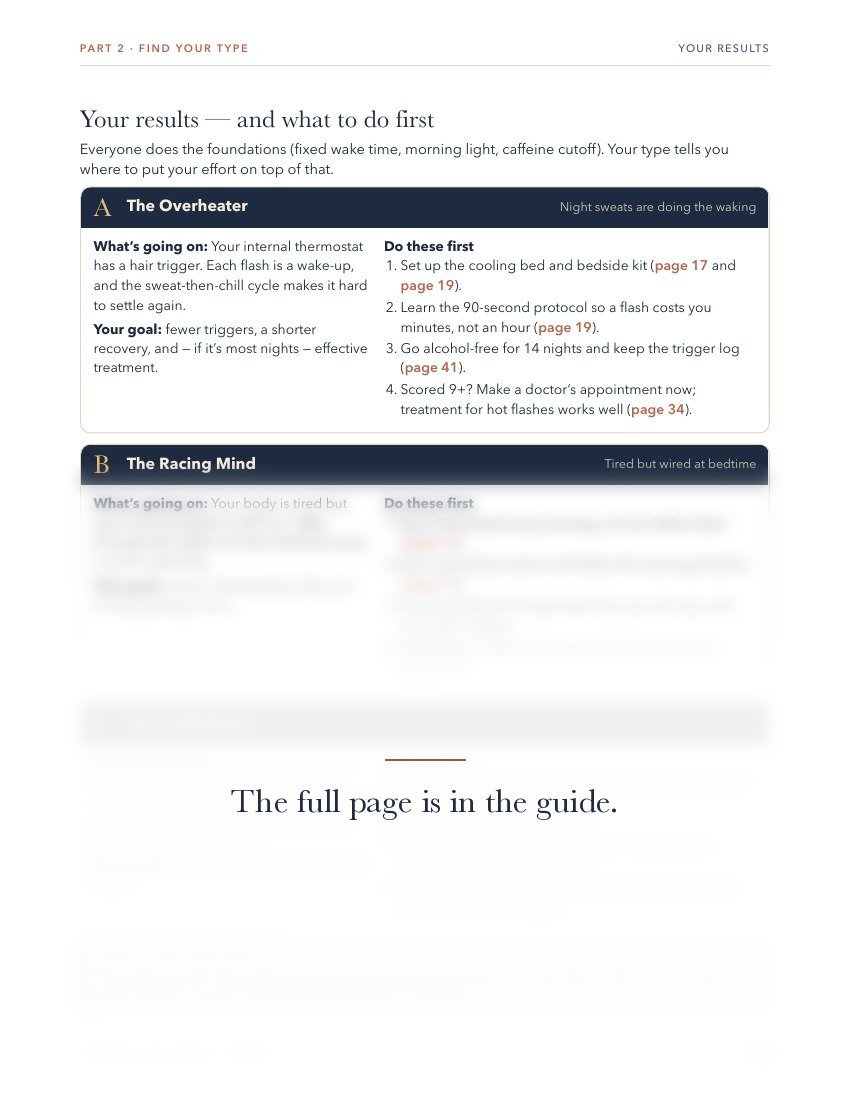
Rather than giving everything up at once, keep a short log for two weeks: what you ate and drank in the evening, the room temperature, and how many times heat woke you. Your worst nights often have something in common.
When the heat wakes you: a 90-second plan
Practice this once in the daytime so it’s automatic. The aim is to stay half-asleep: no lights, no clock, no getting up unless you’re soaked.
- Covers off, stay lying down. Push the layers to the far side and turn the pillow to the cool side.
- Cool your neck and wrists. Cold pack on the back of your neck, one sip of ice water.
- Breathe in for 4, out for 6. Most flashes pass within a few minutes. Count breaths, not minutes. A longer out-breath slows the heart and helps settle the adrenaline that often comes with a flash.
- Damp? Swap, don’t strip. Change your top and peel off the towel layer, eyes mostly closed.
- Pull one light layer back before the chill. Don’t wait until you’re shivering.
- Go back to your breathing. Tell yourself: “That’s done. Nothing to solve.”
A racing heart or a sudden wave of dread during a flash is usually the adrenaline surge that comes with it. Long-exhale breathing is the quickest way through it. If it comes with chest pain, trouble breathing or fainting, call 911.
What’s worth spending on
Start with what’s free: remove the comforter and layer what you own, lay a towel over the sheet, open the window, tie your hair up, turn the thermostat down. Next, the small things: a room thermometer, a bedside fan, an insulated cup, a gel cold pack. After that, if you need it, a percale or linen sheet set, wicking sleepwear and blackout curtains. A cooling mattress pad with a timer or a bedroom air conditioner is worth considering only if sweats are frequent and you’ve already done the rest.
When to talk to your doctor
A cooler room helps you cope with night sweats. It doesn’t replace medical advice. Make an appointment if:
- Night sweats or hot flashes wake you most nights, especially after two to four weeks of a cooler setup. Hormone therapy and non-hormone prescriptions can reduce hot flashes, and your doctor can talk through what suits your history.
- Your night sweats are new and drenching, or come with fever, unexplained weight loss, swollen glands or a persistent cough.
- They start years after your periods ended.
- You’ve started a new medication. Some antidepressants, tamoxifen and aromatase inhibitors, steroids, opioids and some diabetes medications can cause sweating. Ask about it, but never stop a prescription on your own.
- You get new palpitations during the day.
Chest pain, trouble breathing or fainting: call 911.
If you’d like it all in one place.
The full cooling setup, a 12-point bedroom audit, the 90-second plan and a 14-night trigger log, inside a 30-day sleep reset for women after 40.
Get the guide · $19This article is general wellness information for women after 40, written from Vester’s guide Through the Night. It isn’t medical advice and can’t take into account your own history. Results vary.