
Coffee and wine after 40: when to stop so they don’t cost you sleep.
You don’t have to give them up. But the coffee that never bothered you at 35 and the glass of wine that used to help you drift off can both be costing you sleep now. Timing beats quitting.

You’ve had an afternoon coffee for twenty years. You’ve always had a glass of wine with dinner, and it always helped you unwind. Nothing about either habit has changed. Your sleep has.
That’s the frustrating part, and also the useful one. In your forties, sleep gets lighter and easier to disturb, and the way your body handles both caffeine and alcohol shifts. You don’t need to give up either one to sleep better. You do need to pay more attention to when you have them.
Why the same cup hits differently now
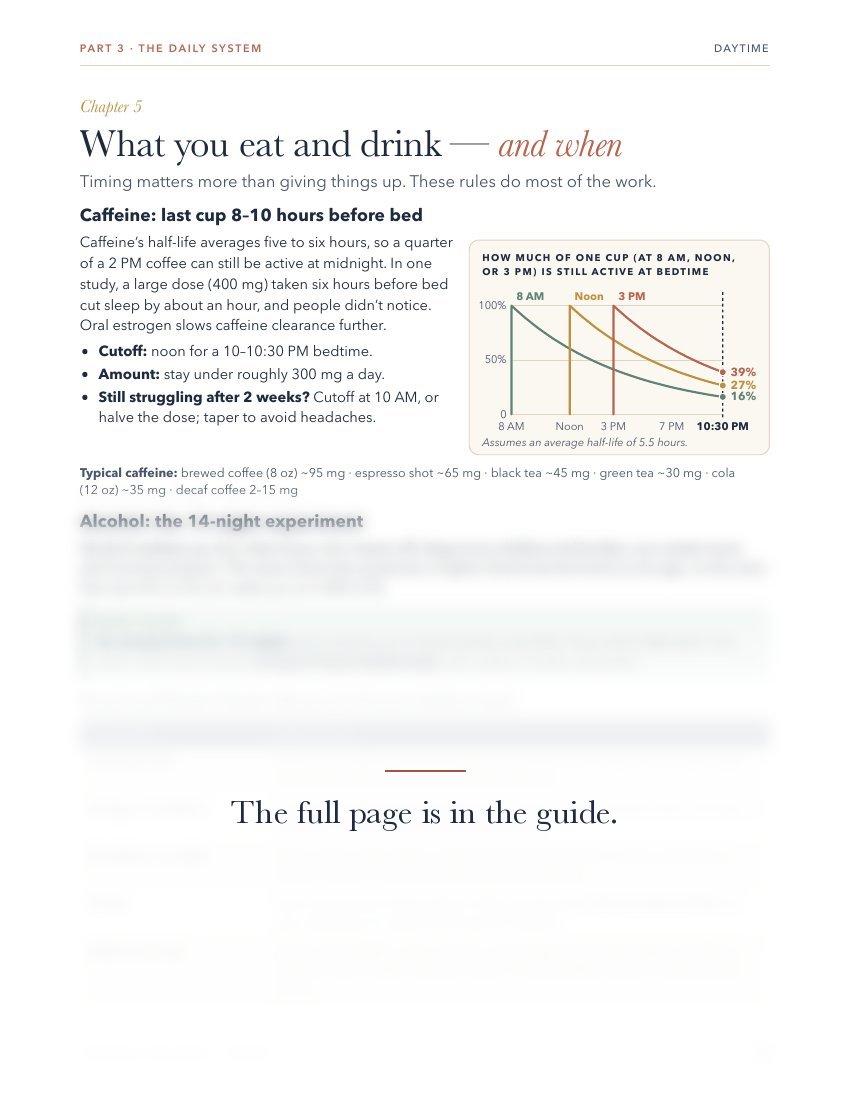
Caffeine leaves your body slowly. Its half-life averages five to six hours, which means that half of a 3 PM coffee is still in your system at 9 PM, and a quarter of a 2 PM coffee can still be active at midnight.
The tricky part is that you can fall asleep fine and still lose sleep to it. In one study, a large dose of caffeine (400 mg, about four cups of brewed coffee) taken six hours before bed cut sleep by about an hour, and the people taking it didn’t notice. What caffeine mostly takes is deep sleep, so it shows up as lighter nights, more wakings and a foggier morning rather than as trouble dropping off.
Two things make this matter more after 40. Lighter sleep is easier for caffeine to disrupt. And oral estrogen, in some forms of hormone therapy and the pill, slows down how fast your body clears caffeine, so the same cup lasts longer.
Your caffeine cutoff
- Last caffeine 8 to 10 hours before bed. For a 10 to 10:30 PM bedtime, that’s noon. Later bedtime, later cutoff.
- Stay under roughly 300 mg a day. That’s about three cups of brewed coffee.
- Have the first cup after food. Caffeine on an empty stomach gives a bigger jolt and a bigger drop later.
- Already past noon today? No more caffeine today, and start the cutoff tomorrow.
- Still struggling after two weeks? Move the cutoff to 10 AM, or halve the amount. Taper over a few days rather than stopping at once, to avoid headaches.
It helps to know where caffeine hides. Typical amounts: brewed coffee (8 oz) about 95 mg, an espresso shot about 65 mg, black tea about 45 mg, green tea about 30 mg, cola (12 oz) about 35 mg. Decaf isn’t zero: a cup has roughly 2 to 15 mg, which only matters if you drink a lot of it late.
What a glass of wine does to the second half of the night
Alcohol is a sedative, so it really does help you fall asleep. The problem comes a few hours later. As your body clears it, sleep turns shallow and broken, you sweat more, and snoring gets worse. For many women that lands somewhere between 2 and 4 AM, which is why alcohol is one of the most common hidden reasons for waking at 3 AM.
The same drink also produces a higher blood-alcohol level as we age, partly because we carry less water in our bodies. The wine that was fine at 35 can wake you at 3 AM at 50. And because it makes you sweat more as it wears off, it’s a common trigger for night sweats.
The next day, it shows up as a foggy morning that’s easy to mistake for “no energy.”
The 14-night experiment
Instead of guessing, test it. Fourteen nights is long enough to see a real difference and short enough to actually do.
- Pick a start date, and go alcohol-free for 14 nights in a row, weekend included.
- Keep a short note each morning. How the night felt from 1 to 5, a rough guess at how long you were awake, and your energy at 3 PM. Never check the clock in the night to fill it in.
- Compare the two weeks with the two weeks before. Most people can see the difference in their notes, not just feel it.
- Then set your own rule. If you drink afterward: one drink, with food, finished at least three hours before bed, with a glass of water alongside.
Two things not to do. Don’t have a drink “to make sure” you sleep; it buys you the first half of the night and costs you the second. And never combine alcohol with sleeping pills or sedating supplements. Even “natural” sleep aids can be risky with alcohol.
Keep the ritual, change what’s in the cup
Most of what we like about an afternoon coffee or an evening glass is the ritual: the pause, the warmth, the signal that one part of the day is over. You can keep that.
- In the afternoon: herbal tea, sparkling water, or a cold glass of water with lemon. If you’re reaching for coffee at 3 because you’re flagging, the problem is usually lunch and the afternoon dip, not a lack of caffeine. See the 3 PM crash.
- In the evening: a caffeine-free tea as part of your wind-down hour. Credit the ritual more than the herb; it’s the routine that tells your body what comes next.
- With dinner: if you’d like a drink, have it with the meal rather than after it, so it’s finished well before bed.
How you’ll know it’s working
Changes usually show up in a particular order: fewer and shorter wakings in the second half of the night first, then easier mornings, then a steadier afternoon. Most people notice something within one to two weeks of a strict noon cutoff and the alcohol experiment. Results vary, and single nights don’t tell you much. Look at the week.
Caffeine and alcohol are rarely the only thing going on. They work best alongside a fixed wake-up time, outdoor light in the morning and a cool bedroom.
When to talk to your doctor
Timing changes help with a lot, but some things need a conversation. Book an appointment if:
- You snore loudly, or someone has noticed you gasp, choke or stop breathing in your sleep. Alcohol and sedatives make this worse, so avoid both until you’ve been checked.
- Heartburn or reflux wakes you at night.
- Your heart races or skips, especially after caffeine or alcohol.
- You find it hard to cut back on drinking, or often drink more than you meant to. That’s common and nothing to be ashamed of. Your doctor can help, and the SAMHSA National Helpline (1-800-662-4357) is free, confidential and open 24/7.
- You take regular medication. Ask your pharmacist how it interacts with alcohol and caffeine.
- You’ve slept badly three or more nights a week for three months, even with good habits in place.
Chest pain or trouble breathing: call 911. If you ever have thoughts of harming yourself, call or text 988, the Suicide & Crisis Lifeline.
If you’d like it all in one place.
The caffeine and alcohol rules, a tracker for your 14 nights and the full 3 AM plan, inside a 30-day sleep reset for women after 40.
Get the guide · $19This article is general wellness information for women after 40, written from Vester’s guides Through the Night and Daylight. It isn’t medical advice and can’t take into account your own history. Results vary.